Learn · digital identity
The EU digital wallet: what it does not force
Before the end of 2026 every country must offer one. The law says, in as many words, that using it is voluntary. What changes and what stays the same.
Text drafted with artificial intelligence. The topic, the angle and the final review are Ibrahin's. How AI is used here
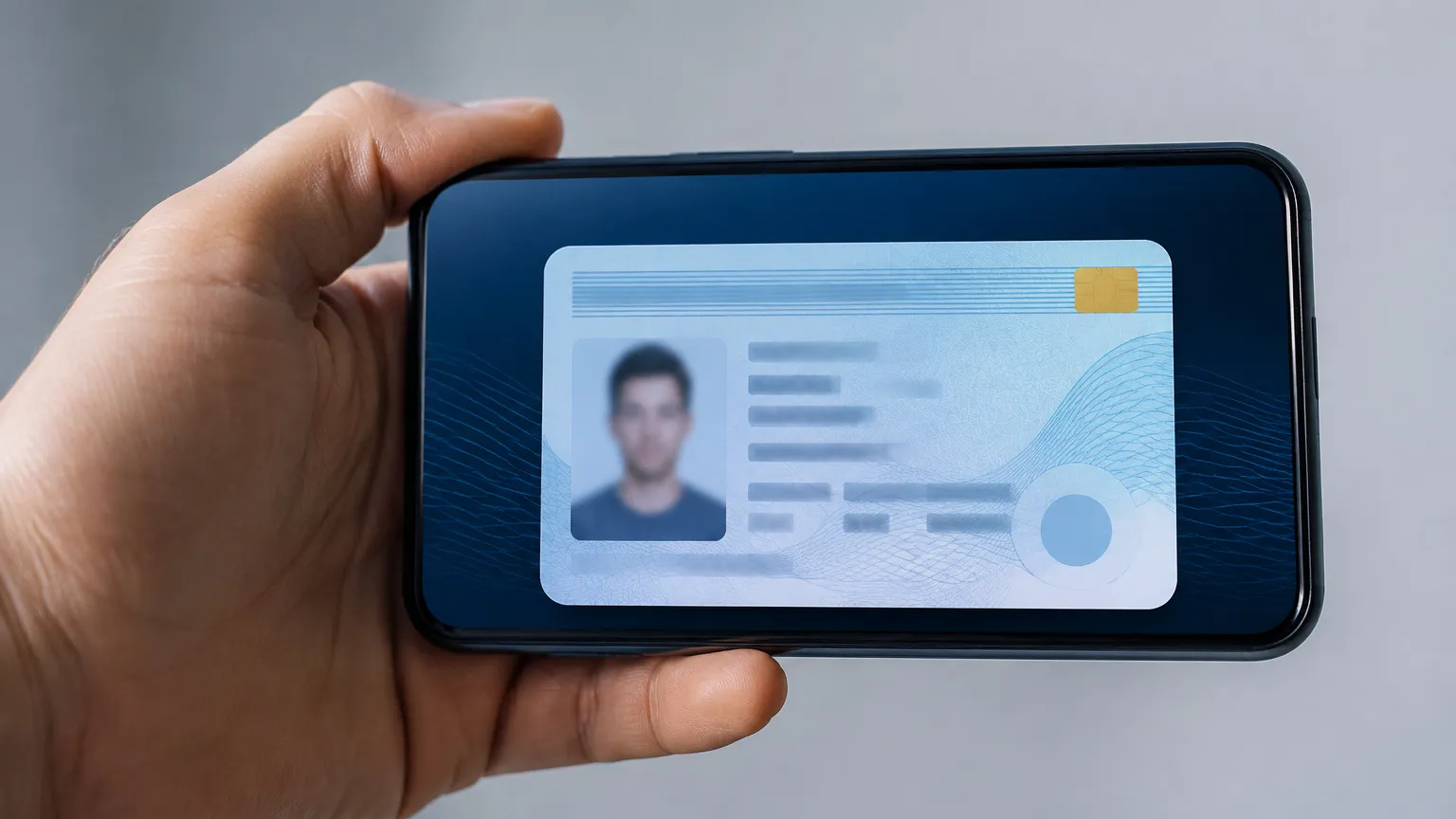
Before the end of 2026, every country in the European Union has to offer its citizens a digital identity wallet. It is a phone app where you keep your identity and your documents, and present them when they are needed.
And as always with these things, the messages are already going around: that you will be forced to use it, that the ID card is finished, and that from now on they will know everything you do. Let us take it in order, with the law in hand.
First: using it is voluntary, and it is written down
This is not an interpretation. It is Article 5a(15) of the European regulation, word for word:
“The use of European Digital Identity Wallets shall be voluntary. Access to public and private services, access to the labour market and freedom to conduct a business shall not be restricted in any way, nor made disadvantageous, for natural or legal persons who do not use European Digital Identity Wallets.”
Two obligations get deliberately confused, and are worth separating:
Who is obliged to do what
Regulation (EU) 2024/1183
What it requires, and of whom
The European Commission repeats it on its frequently asked questions page: there will be no obligation to use the wallet.
What it actually is
An app where you keep credentials: who you are, and also other documents an authority has issued to you. When a service needs to check something about you, you show it from there.
The point of it is something the regulation calls selective disclosure, and an example explains it better. Today, to prove you are of age, you show your ID card: and with it go your name, your photo, your full date of birth and your number. With the wallet you can prove only that you are of age, giving nothing else away.
That is less information travelling around, not more.
What the law says about tracking
Three specific articles, not brochure promises:
- User control. Article 5a(4) requires that you can select, combine, store, delete and present your data “under the sole control of the user”.
- The provider does not collect more than needed. Article 5a(14): whoever provides your wallet “shall not collect information about the use of the wallet which is not necessary”.
- Nobody follows your trail. Article 5a(16) prevents whoever issues a document, “or any other party”, from obtaining data that allows what you do to be “tracked, linked or correlated”.
Now the honest part: those are legal obligations and technical requirements, not an accomplished fact. Whether they are met depends on how each country’s wallet is built and certified. The law points in the opposite direction to tracking, which is already a good deal more than can be said for almost any app you have installed. But that is not the same as it being done.
What about the existing Spanish systems?
They keep working, and none of them has an announced retirement date.
Cl@ve is still officially defined as the common identification, authentication and electronic signature system across the Spanish public administration. The Royal Mint still issues the citizen certificate. And the national ID card is still, under Royal Decree 255/2025, “the only document with sufficient value on its own to prove identity”, to which that same decree added a digital version on the phone with the same validity.
There is also a legal argument: since Article 5a(15) forbids leaving anyone without an alternative, switching off the current methods would be illegal while the wallet is voluntary.
The correct thing to say is this: today they coexist, and there is no retirement date. Not that they will coexist forever, because nobody says that.
What exists in Spain today?
Here I have to be clear about what I do not know.
In the official sources I could consult, there is no record of a general-purpose Spanish European wallet you can install today. What is documented is something else: the Ministry for Digital Transformation developed an app called Cartera Digital Beta, created to verify that someone is of age, which the government describes as aligned with the new European rule and with which Spain takes part in the European pilot. And there is a credentials pilot with the Royal Mint limited to three universities.
The final name of the Spanish wallet, its general launch date and who is building it: I could not confirm any of that in an accessible official source. I would rather tell you that than invent a name.
Which produces the only practical advice in this section, and it is a security one: do not search for “digital wallet” in the app store and install the first thing that comes up. That is exactly the scenario fraudulent apps exploit when a topic is in the news. When the official one arrives, it will be announced from a government website, and you will type the address yourself.
The three myths you are going to hear
“They are going to force you, and without it you will not be able to do paperwork.” False. Article 5a(15) says literally the opposite, and the Commission repeats it. The end-of-2026 obligation belongs to the states: to offer it.
“Goodbye to the ID card, to Cl@ve and to the certificate.” False. All three remain in force, with no retirement announced, and the ID card was just reinforced by a 2025 royal decree, not abolished.
“Brussels will know which websites you visit.” False, and it is the other way round: the regulation expressly forbids tracking and correlation, and its flagship feature lets you prove one fact without revealing your identity.
If any of these reaches you by WhatsApp with urgency and a link, you already know what kind of message that is. And when the wallet really exists, the account behind it will be as important as your email: protect it the same way.
Sources
- Regulation (EU) No 910/2014, consolidated text, Article 5a — EUR-Lex
- Regulation (EU) 2024/1183 — EUR-Lex
- Frequently asked questions on European digital identity — European Commission
- Royal Decree 255/2025, regulating the national ID card — BOE, in Spanish
- Electronic certificate for individuals — FNMT-RCM, in Spanish
Related
Review
Responsible for publication: Ibrahin. Date: 2026-09-04. Last checked: 2026-09-04. The quotations from the regulation come from the consolidated text on EUR-Lex. The state of the Spanish wallet is described only as far as the official sources consulted allow, and whatever could not be confirmed is said so explicitly.